


For nearly thirty years, Olindo Lazzaro has focused on one thing: improving safety. Today, he does so on a global scale as Global Head of EHS & Sustainability by Design at CSL. He works on large, complex challenges related to process safety, risk, and sustainability. His approach? It must not only look right on paper, it has to work in practice.
Down-to-earth
That pragmatic mindset is something he shares with Valentina, at the time advisor at Oostkracht10. There are more similarities: both Olindo and Valentina are originally from Italy and know each other through the network for Seveso companies. Much of their work connects to one of Europe’s most important safety frameworks: the Seveso Directive. A directive that originated in, indeed, Italy. Plenty of reasons for Valentina to sit down with Olindo and discuss the Seveso Directive.
From engineering to safety
Olindo started his career as an engineer, but soon found his way into safety. “I entered the world of safety through process safety. That’s where my real passion lies.”
Throughout his career, he has worked for several international companies subject to the Seveso Directive, European legislation for companies handling hazardous substances.
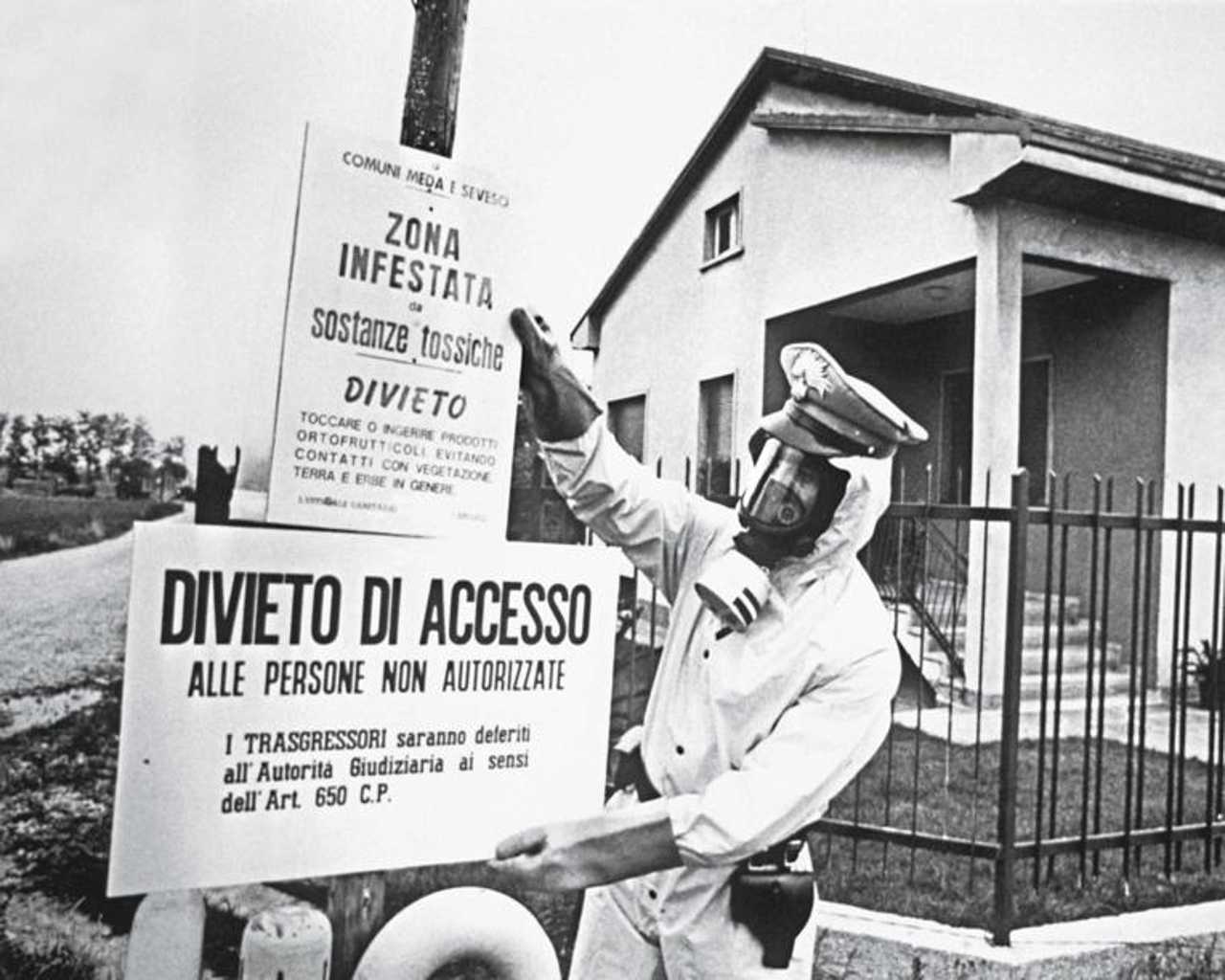
“That directive was introduced after a major disaster in Seveso, where it turned out the company complied with all the rules, yet things still went wrong. That was a turning point. Since then, it’s no longer just about compliance, but about truly understanding and managing risks.”
More than technology
According to Olindo, what makes the Seveso Directive unique is its multidisciplinary nature. “It’s not just about technology or installations. It also involves management systems, decision-making, and even spatial planning.”
Valentina: “Companies are not only required to identify and analyze risks, but also to demonstrate how they control them.”
Olindo: “Exactly. It forces companies to look beyond their own facilities. They also need to consider their surroundings.”
Zero risk
Valentina lives in Enschede, the city where the fireworks disaster took place. “Why do things still go wrong, despite all the measures, laws and regulations?”
“Zero risk does not exist,” Olindo says. “The only way to achieve that is to eliminate the risk entirely. For example, by no longer using hazardous substances. In all other cases, a residual risk will always remain.” The challenge lies in identifying and managing that risk as effectively as possible. “You need to understand where the hazards are and ensure you have taken sufficient measures.”
Where things really go wrong
According to Olindo, incidents are rarely caused by technology alone. “In my experience, the issue often lies within the organisation. In leadership, culture, or knowledge.”
Valentina recognises this: “It’s often not a single measure that fails, but several at the same time. And there is almost always an organisational component behind that.”
Olindo: “You can have the best technical systems in place. But if people don’t follow procedures, or if changes are not managed properly, a gap emerges between how things are designed and how they actually work in practice. And that’s where the risk lies.”
Culture is crucial
According to him, safety consists of three elements: technology, management, and culture.
“The first two are relatively well defined. The third, culture, is the most difficult. You can’t simply measure or inspect it, yet it is crucial.”
That is exactly why it is so important to involve people in risk analyses. “The people who work with installations on a daily basis often know best what really happens. If you don’t involve them, you miss essential information.”
Low probability, high impact
More than fifty years after the disaster, the Seveso Directive remains highly relevant. “Technology has improved, but the real challenge still lies in behaviour and decision-making,” says Olindo. “Especially because you don’t encounter these risks every day. They are low-probability, high-impact risks. That’s precisely why it’s so important to stay sharp, even when nothing happens for a long time.”
In addition, new risks are emerging due to climate change, cyber threats, and the energy transition. “New technologies bring new safety challenges.”
Not a calculation
Despite all the risks, neither Olindo nor Valentina feels unsafe around industrial sites.
Valentina: “The risks are well understood and managed. Often, risks in everyday life are greater, but less visible.”
According to Olindo, what makes the difference is how organisations deal with them. “Safety is not a calculation or a checklist. It’s a combination of factors. And above all: a shared responsibility.”
"Do you have a question?"